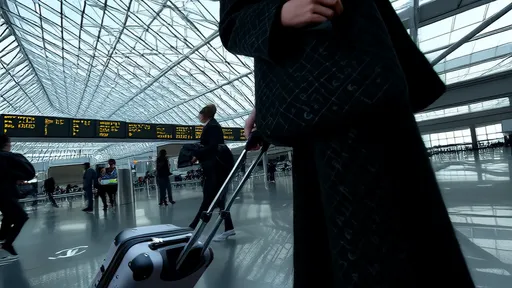
The Chanel Terminal narrative has emerged as a fascinating cultural phenomenon, weaving together the worlds of luxury fashion and the universal language of travel. At its core, this concept represents more than just a seasonal collection or marketing campaign; it serves as a powerful contemporary metaphor for mobility, transition, and the fluidity of modern identity. The airport terminal, traditionally a transient non-place, becomes transformed through Chanel's lens into a stage for sartorial storytelling where luggage tags become jewelry and boarding passes transform into accessories.
When Karl Lagerfeld first unveiled the Chanel Terminal concept in the early 2000s, it marked a deliberate departure from conventional fashion presentations. The elaborate airport-themed runway shows didn't merely borrow aviation aesthetics as superficial decoration; they created an immersive environment that spoke to the jet-set lifestyle Chanel had long embodied. The departure boards flashing exotic destinations, the rolling luggage serving as handbags, and the air hostess-inspired uniforms all contributed to what would become one of fashion's most enduring contemporary narratives.
The genius of Chanel's travel symbolism lies in its dual nature - it simultaneously celebrates the romance of travel while acknowledging its democratization. Where once international travel represented the ultimate luxury, today it has become commonplace, yet Chanel manages to reinvest it with exclusivity through their narrative. The brand's travel motifs don't simply reference physical movement; they speak to social mobility, cultural exchange, and the perpetual motion that defines modern life. The terminal becomes a metaphor for life's transitions - between cultures, between identities, between stages of one's personal journey.
Contemporary culture has become increasingly nomadic, both physically and digitally, making Chanel's terminal narrative particularly resonant. The collection's recurring motifs - passport holders, luggage charms, globe-shaped clutches - serve as talismans for this new reality. They represent not just the ability to move through space, but the sophistication to navigate multiple cultural contexts with ease. In an era where geographic boundaries blur yet cultural distinctions remain vital, these symbols take on profound meaning.
What makes this narrative endure is its adaptability to changing contexts. Post-pandemic, the terminal theme has acquired new layers of meaning. Where it once spoke primarily of freedom and escape, it now also carries undertones of reunion, of borders reopening, of connections reestablished. The luggage tags and boarding pass motifs that seemed playful a decade ago now evoke deeper emotional responses, speaking to our collective experience of separation and renewed mobility.
The terminal narrative also cleverly addresses fashion's own evolving relationship with time and seasonality. Airports exist outside normal temporal structures - they're places where time zones collide, where arrivals and departures operate on their own schedules. Similarly, Chanel's travel-themed collections often play with traditional fashion calendars, introducing cruise collections that exist between seasons, much like transit exists between destinations. This parallel creates a conceptual harmony that elevates the narrative beyond mere theme into a coherent philosophy.
Chanel's travel symbols have permeated popular culture to an extraordinary degree, appearing in films, music videos, and social media far beyond their original runway context. The iconic quilted travel bags with their chain straps have become instantly recognizable shorthand for a certain kind of sophisticated mobility. This cultural penetration demonstrates how effectively the brand has transformed practical travel items into aspirational symbols, maintaining their functional roots while elevating them to the realm of luxury.
At its most profound level, the terminal narrative speaks to contemporary anxieties about identity and belonging. In a world where more people than ever live between cultures, the Chanel traveler represents an idealized version of this reality - someone equally at home everywhere and nowhere, whose style transcends geographic boundaries. The collections suggest that personal style can serve as both anchor and compass in an increasingly mobile world, providing continuity amid constant change.
The materials and craftsmanship in Chanel's travel-themed pieces further reinforce this narrative. The sturdy yet supple leathers suggest durability for life's journeys, while the meticulous stitching and finishing speak to the care taken in one's personal presentation regardless of location. Even the hardware - often featuring miniature airplanes, compasses, or luggage details - serves as subtle reinforcement of the overarching theme, creating pieces that are at once playful and deeply considered.
As sustainability concerns reshape the fashion industry, Chanel's travel narrative has shown remarkable resilience by evolving to address these issues. Recent collections have emphasized the timelessness of well-crafted travel pieces, the value of investment buying over fast fashion, and the idea of a curated wardrobe that travels across seasons and continents. This adaptation demonstrates how a strong narrative framework can accommodate shifting cultural priorities while maintaining its core identity.
Ultimately, the power of Chanel's terminal metaphor lies in its ability to make tangible the abstract experiences of modern life. In transforming the symbols of travel into luxury objects, the brand provides a framework for understanding our contemporary condition - one where movement is both privilege and necessity, where identity is constantly performed and renegotiated, and where style serves as both armor and expression in navigating an increasingly complex world.
The narrative's continued relevance suggests it has tapped into something fundamental about our era. As technology makes physical travel simultaneously more accessible and, in some ways, less special, Chanel's travel symbols preserve the romance of the journey while updating it for contemporary sensibilities. They remind us that even in an age of digital nomadism and virtual connection, the physical experience of moving through space retains its power to transform and inspire.
Looking forward, the Chanel Terminal narrative will likely continue evolving, reflecting new understandings of mobility, luxury, and global citizenship. Its endurance as a conceptual framework demonstrates the brand's uncanny ability to anticipate cultural shifts while maintaining its distinctive voice. In an industry often criticized for its ephemerality, this sustained narrative stands as testament to the power of fashion to articulate deeper truths about how we live now.
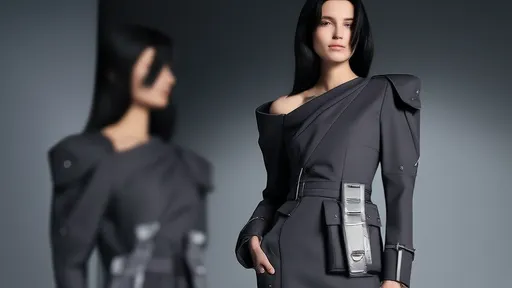
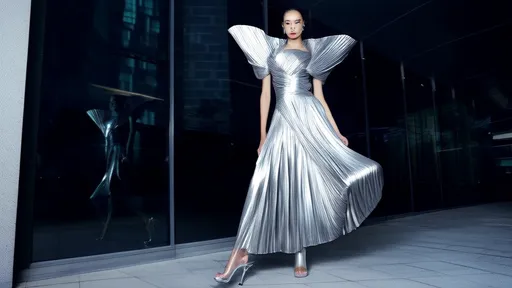
The intersection of athletic functionality and evening wear elegance has birthed one of fashion's most compelling contemporary hybrids: the performance evening gown. Where once these two worlds existed in separate sartorial universes, designers now weave technical fabrics into lavish silhouettes with the precision of couturiers and the ingenuity of engineers. This sartorial alchemy doesn't simply layer sportswear elements over formalwear - it reimagines the very architecture of glamour through the lens of movement.
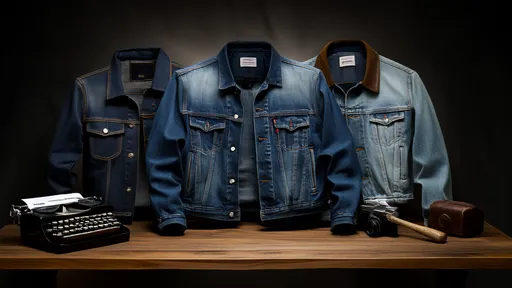
The denim jacket stands as one of fashion’s most enduring silhouettes, a garment that has weathered shifting trends while maintaining its rebellious spirit. What began as utilitarian workwear in the late 19th century has evolved into a cultural touchstone, with each decade leaving its mark on the classic design. From its origins in the American West to its adoption by countercultural movements, the denim jacket’s journey reflects broader societal changes, making it far more than just a piece of clothing.
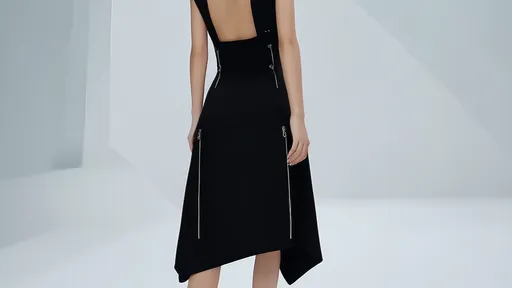
The fashion world is buzzing with the latest innovation in wardrobe staples: the redefined little black dress (LBD) featuring adjustable-length magnetic design. This groundbreaking approach to a timeless classic is set to revolutionize how women interact with their most trusted garment. Gone are the days of owning multiple LBDs for different occasions; this single, versatile piece adapts to your needs with effortless precision.
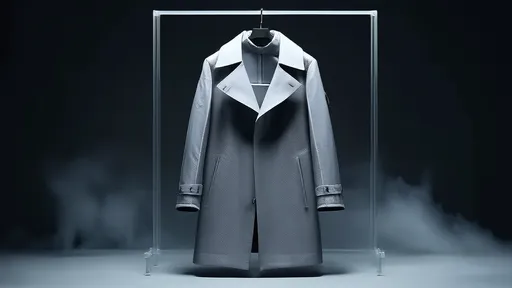
The fashion industry has long sought the perfect balance between aesthetics and functionality, particularly in outerwear. For decades, designers have wrestled with the challenge of creating lightweight, stylish coats that can withstand the elements without sacrificing form. Now, a groundbreaking innovation in textile technology promises to revolutionize the classic trench coat: paper-like waterproof coatings that defy conventional expectations of durability and performance.
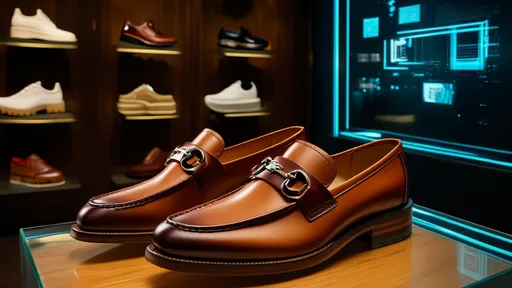
The loafer has walked a curious path through fashion history – from Ivy League campuses to Silicon Valley offices, from preppy status symbol to countercultural staple, and now into the pixelated realms of digital avatars. This slip-on shoe with its mocassin construction and heel strap has become one of footwear's most enduring shape-shifters, adapting to each era while retaining its essential DNA.
The ancient Maya civilization left behind more than just towering pyramids and mysterious glyphs - they gifted humanity with an intricate cosmic clock that continues to inspire modern design. Fashion designers and textile artists are now rediscovering the profound beauty encoded within the Mayan solar calendar, transforming its sacred geometry into contemporary patterns that bridge millennia.
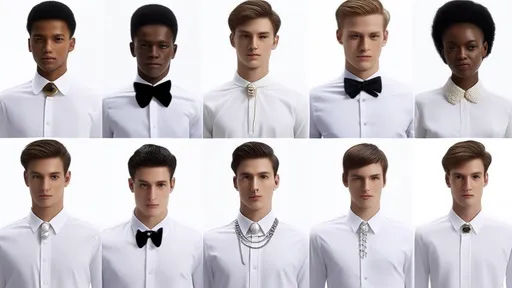
The fashion industry is witnessing a quiet revolution in menswear, where the humble white shirt is being reimagined through innovative detachable collar systems. This movement, often referred to as the "White Shirt Revolution," challenges traditional tailoring conventions by introducing unprecedented versatility to professional wardrobes. At its core lies a simple yet transformative idea: what if the most formal element of a dress shirt could be changed as easily as selecting a necktie?
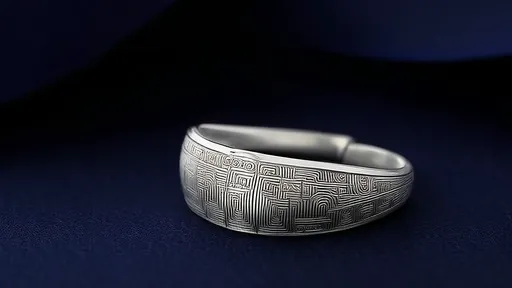
The clinking of tiny silver hammers has echoed through Guizhou's misty mountains for centuries, where Miao artisans transform precious metal into wearable poetry. Today, this ancient craft faces a paradox - how to preserve its soul while shedding unnecessary weight for contemporary life. The answer may lie in subtraction.
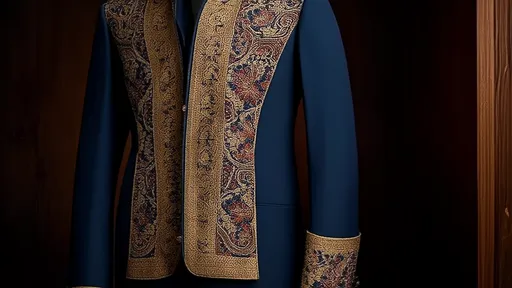
The world of fashion is no stranger to drawing inspiration from the rich tapestry of art history, but few collaborations are as visually striking as the recent trend of transplanting Persian miniature motifs onto modern suiting fabrics. This unexpected fusion of medieval Persian artistry with contemporary tailoring has created a sartorial revolution, blurring the lines between museum-quality craftsmanship and wearable art.
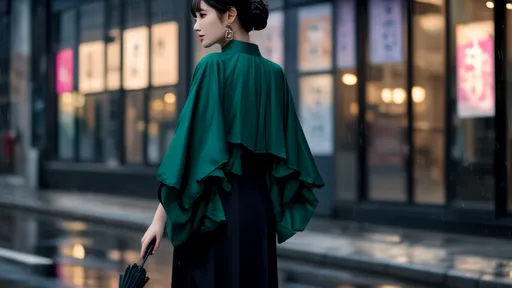
The traditional kimono, with its elegant lines and distinctive sleeve construction, has long been a source of inspiration for fashion innovators. Recently, a bold new styling technique has emerged from Tokyo's avant-garde fashion circles – transforming the kimono's signature wide sleeves into dramatic cape-like silhouettes. This sartorial alchemy breathes contemporary life into centuries-old garment architecture while preserving the garment's cultural DNA.
The rhythmic pulse of African geometry beats through generations, not in rigid Euclidean theorems but in the living language of tribal totems. Across the vast continent, from the scarified patterns of the Dinka to the fractal murals of the Bamileke, a profound visual mathematics emerges – one that distills cosmic order into minimalist forms while carrying the weight of ancestral memory.
The fashion world has long looked to Paris, Milan, and New York as its traditional powerhouses, but in recent years, a new contender has emerged from the East with undeniable force. Shenzhen Fashion Week, once a regional event, has rapidly evolved into a global phenomenon, showcasing the bold, innovative spirit of China’s new wave of designers. What sets this fashion week apart isn’t just its scale or glamour—it’s the raw, unfiltered creativity that challenges conventions and redefines what it means to be "Made in China."
The vast, sun-scorched expanse of the California desert became an unlikely cathedral of high fashion when Anthony Vaccarello presented Saint Laurent's latest collection. Against the stark beauty of this arid landscape, the creative director staged what can only be described as a masterclass in minimalist theater - one that left the fashion world reeling with its bold simplicity and raw emotional power.
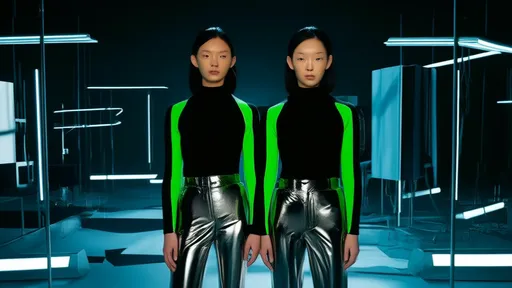
The recent Gucci Twins campaign has reignited longstanding debates about cloning aesthetics in fashion advertising. When the luxury house released its eerie twin-themed visuals featuring models with identical features moving in perfect synchronization, audiences experienced equal parts fascination and discomfort. This uncanny valley effect lies at the heart of contemporary ethical discussions surrounding the artificial replication of human beauty.
The Chanel Terminal narrative has emerged as a fascinating cultural phenomenon, weaving together the worlds of luxury fashion and the universal language of travel. At its core, this concept represents more than just a seasonal collection or marketing campaign; it serves as a powerful contemporary metaphor for mobility, transition, and the fluidity of modern identity. The airport terminal, traditionally a transient non-place, becomes transformed through Chanel's lens into a stage for sartorial storytelling where luggage tags become jewelry and boarding passes transform into accessories.
The Prada concrete runway show has once again redefined the boundaries between architecture and fashion, transforming raw industrial aesthetics into a sophisticated language of contemporary style. Against the backdrop of an unfinished brutalist space, models strode through a landscape of exposed beams and rough-hewn surfaces, their garments serving as both contrast and complement to the environment. This deliberate collision of refinement and rawness speaks volumes about fashion's evolving relationship with urban materiality.
The bridal industry is undergoing a quiet revolution as sustainability becomes a priority for modern couples. Among the most significant shifts is the growing popularity of rented wedding dresses, a practice that challenges the tradition of single-use gowns. This movement isn't just about reducing textile waste—it's sparking crucial conversations about hygiene standards in garment circulation. As more brides opt for rented dresses, the need for standardized cleaning protocols has become impossible to ignore.
The luxury resale market has long grappled with the challenge of authenticity. As counterfeit goods become increasingly sophisticated, traditional verification methods often fall short, leaving buyers and sellers vulnerable to fraud. Now, a groundbreaking solution is emerging: blockchain-based authentication systems designed specifically for pre-owned luxury items. This technological advancement promises to revolutionize how we verify high-end secondhand goods while bringing much-needed transparency to the $50 billion global luxury resale industry.
The fashion industry is witnessing a significant shift as accessible luxury brands recalibrate their pricing strategies to adapt to changing consumer behaviors. Among these brands, Michael Kors has emerged as a key player in this strategic pivot, adjusting its price points to maintain relevance in an increasingly competitive market. The move reflects broader trends in the industry, where consumers are becoming more price-sensitive without sacrificing their desire for quality and brand prestige.
The Alpha generation, born between 2010 and 2024, is coming of age in a world vastly different from that of their Millennial or even Gen Z predecessors. As the first truly digital-native cohort, their relationship with fashion and consumption is being shaped by unprecedented technological, environmental, and social forces. Their future wardrobes won’t just reflect personal style but will serve as a canvas for broader cultural shifts.