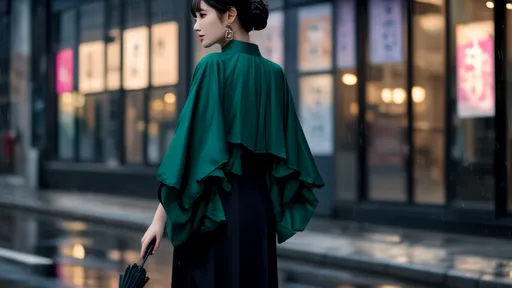
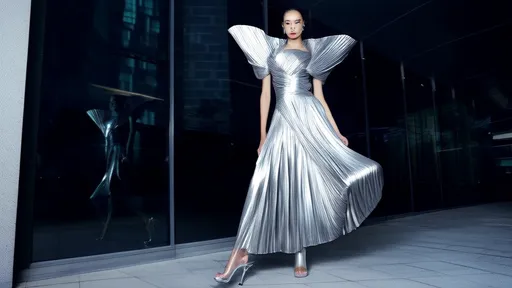
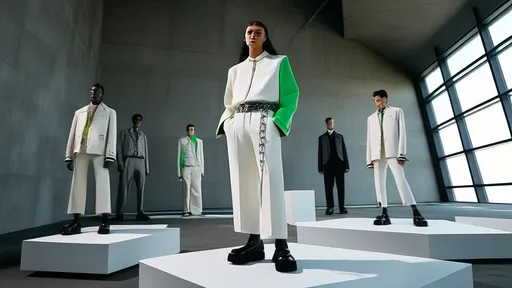
The traditional kimono, with its elegant lines and distinctive sleeve construction, has long been a source of inspiration for fashion innovators. Recently, a bold new styling technique has emerged from Tokyo's avant-garde fashion circles – transforming the kimono's signature wide sleeves into dramatic cape-like silhouettes. This sartorial alchemy breathes contemporary life into centuries-old garment architecture while preserving the garment's cultural DNA.
At the heart of this trend lies a fundamental understanding of kimono construction. The furisode (swinging sleeves) of formal kimono typically extend 39-42 inches in length, creating generous fabric tubes that hang nearly to the ankle when arms are lowered. Designers discovered that by strategically folding and securing these sleeves behind the neck, the entire upper portion of the kimono transforms into an elegant cape-like drape. The obi belt then functions as both waist definition and structural anchor, preventing the garment from slipping off the shoulders.
Cultural purists initially raised eyebrows at this unconventional approach, but many have come to appreciate how it honors the kimono's inherent versatility. "The beauty of traditional Japanese garments lies in their geometric purity," explains Kyoto textile historian Mariko Takahashi. "A single rectangle of fabric becomes sleeves, becomes a cape, becomes infinite possibilities through folding – this philosophy echoes origami principles that have always been part of our design heritage."
Practical adaptations have emerged for modern wearers. Lightweight synthetic linings prevent silk kimono from slipping off smooth contemporary fabrics. Discrete snaps and ties hidden within the sleeve seams allow for easy conversion between traditional and transformed silhouettes. Some innovative designers have even created hybrid garments with reinforced shoulder seams specifically for cape-style wear while maintaining the appearance of classic kimono when worn traditionally.
The styling possibilities multiply when considering different kimono types. A uchikake wedding kimono's heavily padded hem creates voluptuous drape when worn as a cape, while a summer yukata's lightweight cotton forms airy, casual layers. Particularly striking are interpretations using tsumugi silk kimono – their textured, slubbed fabric adds dimensional interest to the new silhouette while the traditional striped patterns create striking visual lines when reconfigured.
Street style photographers in Harajuku have documented particularly inventive iterations. One fashion student paired a vintage indigo-dyed kimono in cape formation with distressed denim and chunky boots, the sleeve ends deliberately left dangling as organic fringe. Another look featured a metallic obi cinching the transformed kimono at the hip over a sleek turtleneck, creating a perfect synthesis of traditional craftsmanship and minimalist modernism.
Beyond aesthetics, this trend speaks to deeper cultural currents. In a 2023 interview, Tokyo-based designer Yuji Honzawa reflected: "Young Japanese people today want to engage with tradition on their own terms. Taking something as iconic as kimono sleeves and reinventing their function – it's not disrespect, but rather the highest form of appreciation. It keeps these garments alive in contemporary contexts." His recently debuted "Kaidan" collection features kimono explicitly designed for dual-purpose wear, with hidden structural elements that enhance both traditional and transformed silhouettes.
The technical challenges of this styling method shouldn't be underestimated. Proper balance requires adjusting the eri (collar) placement and redistributing the garment's weight across the shoulders. Seasoned kimono wearers recommend practicing with inexpensive komon (small pattern kimono) before attempting the technique with valuable heirlooms. When executed correctly, the effect is transformative – the wide sleeves cascade down the back like folded wings, while the main body of the kimono flows around the wearer's form in entirely new ways.
International fashion circles have taken notice. During Paris Fashion Week, several avant-garde designers incorporated kimono-to-cape elements into their collections. Belgian designer Dries Van Noten sent models down the runway with kimono sleeves repurposed as asymmetric capelets over tailored trousers. The look sparked numerous editorials exploring East-meets-West interpretations of the concept, from pairing partial kimono capelets with evening gowns to incorporating the sleeve-folding techniques into Western cape designs.
This innovation arrives at a pivotal moment for kimono culture. As fewer Japanese people wear kimono in daily life, creative reinterpretations may play a crucial role in preserving the craft. Kyoto's Nishijin textile district has reported increased interest from young designers seeking traditional fabrics for experimental projects. Master weavers, initially skeptical, now collaborate on developing hybrid textiles with the structural integrity for innovative wear while maintaining authentic weaving techniques.
The environmental aspect resonates with sustainability-minded wearers. "A single high-quality kimono can serve multiple functions in your wardrobe," notes ethical fashion advocate Hanae Mori. "Worn traditionally for ceremonies, as art when displayed, and now as transformative outerwear – it's the ultimate slow fashion item." Vintage kimono dealers note a 40% increase in sales to customers under 35, many specifically requesting styles suitable for this new wearing method.
Workshops teaching the technique have sprung up from Osaka to New York, often accompanied by discussions on cultural appropriation versus appreciation. Respected kimono schools like the Souke system have begun incorporating "creative styling" modules alongside traditional dressing classes. The debate continues, but most agree that when executed with knowledge and respect, such innovations can be a bridge between cultures rather than a dilution of tradition.
What began as a street fashion experiment has evolved into a legitimate movement in wearable art. Galleries in Tokyo's Ginza district have hosted exhibitions showcasing kimono-cape hybrids as sculptural pieces, while performance artists use the dramatic silhouettes in contemporary dance. The sleeve transformation seems poised to influence design far beyond kimono – already we're seeing echoes in high fashion cape constructions and even home decor textiles playing with similar folding concepts.
As with any living tradition, the kimono continues to reveal new dimensions through creative engagement. This sleeve-to-cape metamorphosis demonstrates how ancient garment architecture contains untapped potential waiting to be unlocked by contemporary visionaries. The wide sleeves that once signaled aristocratic status in Edo period Japan now flutter as avant-garde capes in global fashion capitals – a testament to the enduring relevance of traditional craftsmanship when reimagined through modern eyes.
The intersection of athletic functionality and evening wear elegance has birthed one of fashion's most compelling contemporary hybrids: the performance evening gown. Where once these two worlds existed in separate sartorial universes, designers now weave technical fabrics into lavish silhouettes with the precision of couturiers and the ingenuity of engineers. This sartorial alchemy doesn't simply layer sportswear elements over formalwear - it reimagines the very architecture of glamour through the lens of movement.
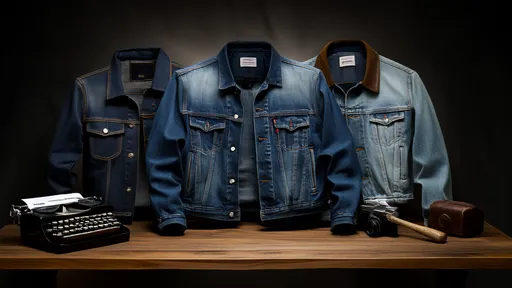
The denim jacket stands as one of fashion’s most enduring silhouettes, a garment that has weathered shifting trends while maintaining its rebellious spirit. What began as utilitarian workwear in the late 19th century has evolved into a cultural touchstone, with each decade leaving its mark on the classic design. From its origins in the American West to its adoption by countercultural movements, the denim jacket’s journey reflects broader societal changes, making it far more than just a piece of clothing.
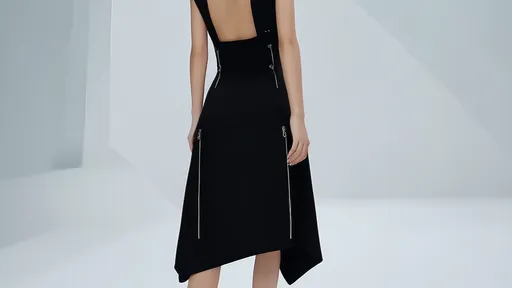
The fashion world is buzzing with the latest innovation in wardrobe staples: the redefined little black dress (LBD) featuring adjustable-length magnetic design. This groundbreaking approach to a timeless classic is set to revolutionize how women interact with their most trusted garment. Gone are the days of owning multiple LBDs for different occasions; this single, versatile piece adapts to your needs with effortless precision.
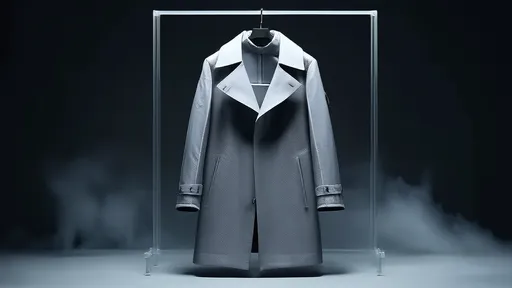
The fashion industry has long sought the perfect balance between aesthetics and functionality, particularly in outerwear. For decades, designers have wrestled with the challenge of creating lightweight, stylish coats that can withstand the elements without sacrificing form. Now, a groundbreaking innovation in textile technology promises to revolutionize the classic trench coat: paper-like waterproof coatings that defy conventional expectations of durability and performance.
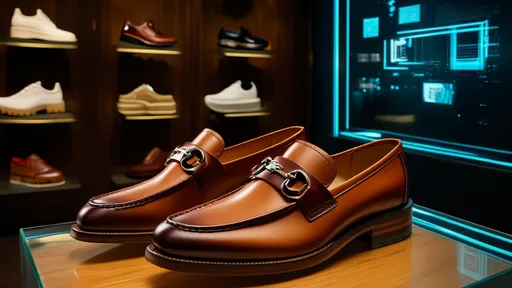
The loafer has walked a curious path through fashion history – from Ivy League campuses to Silicon Valley offices, from preppy status symbol to countercultural staple, and now into the pixelated realms of digital avatars. This slip-on shoe with its mocassin construction and heel strap has become one of footwear's most enduring shape-shifters, adapting to each era while retaining its essential DNA.
The ancient Maya civilization left behind more than just towering pyramids and mysterious glyphs - they gifted humanity with an intricate cosmic clock that continues to inspire modern design. Fashion designers and textile artists are now rediscovering the profound beauty encoded within the Mayan solar calendar, transforming its sacred geometry into contemporary patterns that bridge millennia.
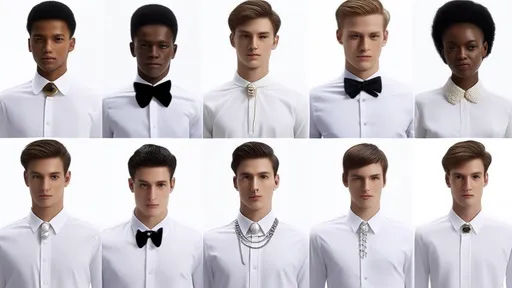
The fashion industry is witnessing a quiet revolution in menswear, where the humble white shirt is being reimagined through innovative detachable collar systems. This movement, often referred to as the "White Shirt Revolution," challenges traditional tailoring conventions by introducing unprecedented versatility to professional wardrobes. At its core lies a simple yet transformative idea: what if the most formal element of a dress shirt could be changed as easily as selecting a necktie?
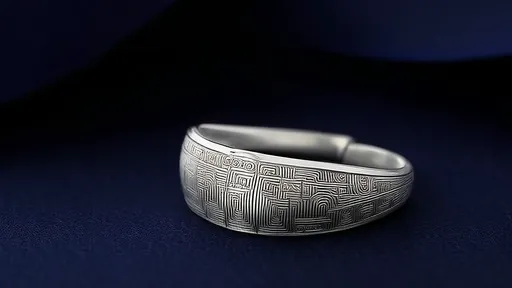
The clinking of tiny silver hammers has echoed through Guizhou's misty mountains for centuries, where Miao artisans transform precious metal into wearable poetry. Today, this ancient craft faces a paradox - how to preserve its soul while shedding unnecessary weight for contemporary life. The answer may lie in subtraction.
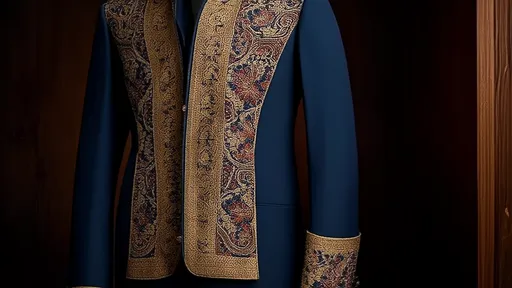
The world of fashion is no stranger to drawing inspiration from the rich tapestry of art history, but few collaborations are as visually striking as the recent trend of transplanting Persian miniature motifs onto modern suiting fabrics. This unexpected fusion of medieval Persian artistry with contemporary tailoring has created a sartorial revolution, blurring the lines between museum-quality craftsmanship and wearable art.
The traditional kimono, with its elegant lines and distinctive sleeve construction, has long been a source of inspiration for fashion innovators. Recently, a bold new styling technique has emerged from Tokyo's avant-garde fashion circles – transforming the kimono's signature wide sleeves into dramatic cape-like silhouettes. This sartorial alchemy breathes contemporary life into centuries-old garment architecture while preserving the garment's cultural DNA.
The rhythmic pulse of African geometry beats through generations, not in rigid Euclidean theorems but in the living language of tribal totems. Across the vast continent, from the scarified patterns of the Dinka to the fractal murals of the Bamileke, a profound visual mathematics emerges – one that distills cosmic order into minimalist forms while carrying the weight of ancestral memory.
The fashion world has long looked to Paris, Milan, and New York as its traditional powerhouses, but in recent years, a new contender has emerged from the East with undeniable force. Shenzhen Fashion Week, once a regional event, has rapidly evolved into a global phenomenon, showcasing the bold, innovative spirit of China’s new wave of designers. What sets this fashion week apart isn’t just its scale or glamour—it’s the raw, unfiltered creativity that challenges conventions and redefines what it means to be "Made in China."
The vast, sun-scorched expanse of the California desert became an unlikely cathedral of high fashion when Anthony Vaccarello presented Saint Laurent's latest collection. Against the stark beauty of this arid landscape, the creative director staged what can only be described as a masterclass in minimalist theater - one that left the fashion world reeling with its bold simplicity and raw emotional power.
The recent Gucci Twins campaign has reignited longstanding debates about cloning aesthetics in fashion advertising. When the luxury house released its eerie twin-themed visuals featuring models with identical features moving in perfect synchronization, audiences experienced equal parts fascination and discomfort. This uncanny valley effect lies at the heart of contemporary ethical discussions surrounding the artificial replication of human beauty.
The Chanel Terminal narrative has emerged as a fascinating cultural phenomenon, weaving together the worlds of luxury fashion and the universal language of travel. At its core, this concept represents more than just a seasonal collection or marketing campaign; it serves as a powerful contemporary metaphor for mobility, transition, and the fluidity of modern identity. The airport terminal, traditionally a transient non-place, becomes transformed through Chanel's lens into a stage for sartorial storytelling where luggage tags become jewelry and boarding passes transform into accessories.
The Prada concrete runway show has once again redefined the boundaries between architecture and fashion, transforming raw industrial aesthetics into a sophisticated language of contemporary style. Against the backdrop of an unfinished brutalist space, models strode through a landscape of exposed beams and rough-hewn surfaces, their garments serving as both contrast and complement to the environment. This deliberate collision of refinement and rawness speaks volumes about fashion's evolving relationship with urban materiality.
The bridal industry is undergoing a quiet revolution as sustainability becomes a priority for modern couples. Among the most significant shifts is the growing popularity of rented wedding dresses, a practice that challenges the tradition of single-use gowns. This movement isn't just about reducing textile waste—it's sparking crucial conversations about hygiene standards in garment circulation. As more brides opt for rented dresses, the need for standardized cleaning protocols has become impossible to ignore.
The luxury resale market has long grappled with the challenge of authenticity. As counterfeit goods become increasingly sophisticated, traditional verification methods often fall short, leaving buyers and sellers vulnerable to fraud. Now, a groundbreaking solution is emerging: blockchain-based authentication systems designed specifically for pre-owned luxury items. This technological advancement promises to revolutionize how we verify high-end secondhand goods while bringing much-needed transparency to the $50 billion global luxury resale industry.
The fashion industry is witnessing a significant shift as accessible luxury brands recalibrate their pricing strategies to adapt to changing consumer behaviors. Among these brands, Michael Kors has emerged as a key player in this strategic pivot, adjusting its price points to maintain relevance in an increasingly competitive market. The move reflects broader trends in the industry, where consumers are becoming more price-sensitive without sacrificing their desire for quality and brand prestige.
The Alpha generation, born between 2010 and 2024, is coming of age in a world vastly different from that of their Millennial or even Gen Z predecessors. As the first truly digital-native cohort, their relationship with fashion and consumption is being shaped by unprecedented technological, environmental, and social forces. Their future wardrobes won’t just reflect personal style but will serve as a canvas for broader cultural shifts.