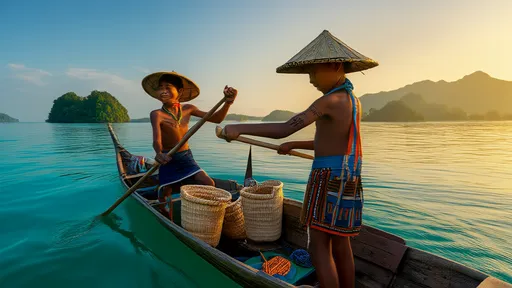
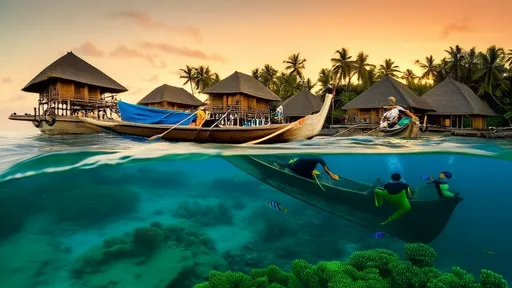
In the turquoise waters of Myanmar's Mergui Archipelago, a unique culture breathes its last. The Moken people, often called Asia's last sea nomads, have navigated these 800 islands for centuries without passports, maps or permanent addresses. Their entire existence has been woven into the tidal rhythms, monsoon winds and migratory patterns of marine life. Yet as the 21st century reaches even these remote corners of Southeast Asia, their ancient way of life stands at the brink of vanishing forever.
The Moken spend eight months of the year living on kabang - handmade boats that serve as both transportation and home. These vessels, crafted from a single tree with techniques passed down through generations, represent one of humanity's last remaining boat-based cultures. During the monsoon season, they build temporary shelters on islands, but always maintain their connection to the sea. Their entire cosmological understanding revolves around the ocean, which they call the mother, believing she provides everything they need to survive.
What makes the Moken truly extraordinary is their evolutionary adaptation to marine life. Studies have shown that Moken children develop 50% better underwater vision than European children, their eyes adapting to constrict differently when submerged. They can dive to depths of 20 meters without equipment, holding their breath for minutes as they hunt for shellfish, sea cucumbers and pearls. This isn't just learned behavior - it represents generations of physiological adaptation to an aquatic existence.
Their relationship with the natural world is both practical and spiritual. The Moken don't measure time with calendars or clocks but through tidal cycles, monsoon patterns and animal behaviors. They can predict weather changes by observing subtle shifts in wave patterns, cloud formations and animal behavior. Their creation myth tells of being born from the sea, and they believe they must return to the water after death. This profound connection informs a conservation ethic that has preserved marine ecosystems where they've lived for centuries.
The Moken language contains no words for want, worry or yesterday, reflecting their present-focused worldview. Their entire vocabulary revolves around the sea, with dozens of specific words for different ocean conditions, marine species and navigational concepts that have no direct translation in other languages. This linguistic uniqueness represents an entire way of thinking about humanity's place in the natural world that may disappear within a generation.
Yet external pressures are rapidly closing in on the Moken's world. Myanmar's opening to tourism has brought resort development, fishing operations and government regulations that threaten their nomadic existence. National park designations, while protecting the environment, often restrict the Moken's traditional movement and harvesting rights. Many have been forced to settle in permanent villages where they face poverty, discrimination and loss of cultural identity.
The 2004 tsunami marked a turning point for the Moken. Their traditional knowledge saved countless lives - noticing the sea's unusual behavior, they moved to high ground before the waves hit. This dramatic demonstration of their environmental wisdom brought international attention, but also increased government efforts to settle them permanently. What officials saw as protection, the Moken experienced as cultural imprisonment, separated from the sea that defines their identity.
Today, fewer than 3,000 Moken remain, and only a handful of elders still practice the full nomadic tradition. Younger generations face impossible choices between preserving their heritage and accessing education, healthcare and economic opportunities. Many have abandoned boat life for settled existence, losing their ancestral knowledge within years. The boat-building techniques, navigational wisdom and spiritual traditions that developed over millennia are disappearing within decades.
International organizations struggle with how to help without causing further harm. Well-meaning initiatives often impose Western conservation models or development approaches that undermine Moken autonomy. The most successful programs involve Moken leaders in designing solutions that respect both their cultural integrity and practical needs. Some communities are developing eco-tourism initiatives that share their knowledge while generating income, though balancing cultural preservation with commercial interests remains challenging.
Climate change presents another existential threat. Rising sea levels, coral bleaching and changing fish migration patterns disrupt the delicate ecological balance the Moken lifestyle depends upon. Their traditional forecasting methods, developed over centuries, struggle with the unprecedented changes brought by global warming. The very environmental knowledge that sustained them for generations becomes less reliable as the climate shifts in ways beyond their historical experience.
The tragedy of the Moken's situation lies in what the world stands to lose. Their knowledge represents thousands of years of accumulated wisdom about marine ecosystems, sustainable living and human adaptation. Medical researchers study their unique physiological adaptations, marine biologists learn from their understanding of ocean ecology, and anthropologists document their alternative model of human existence. Their disappearance would represent not just the loss of a culture, but the extinction of an entire way of being human.
Some hopeful developments are emerging. Myanmar has begun recognizing Moken land and sea rights in limited areas. Cultural preservation programs are helping document endangered knowledge before it disappears. A growing appreciation for indigenous wisdom has created new interest in learning from rather than "civilizing" the Moken. Their profound environmental connection offers insights precisely when humanity most needs sustainable models of existence.
The Moken face their uncertain future with characteristic resilience. Those who maintain the traditional lifestyle continue to adapt, incorporating limited modern elements while preserving core traditions. Some navigate using both stars and GPS, hunt with traditional spears but sell catch to markets, and balance seasonal settlement with nomadic movement. This pragmatic adaptation has always been their strength - the question is whether they can adapt quickly enough to survive the overwhelming changes confronting them.
Visitors to the Mergui Archipelago today encounter a world in transition. Luxury yachts sail past traditional kabang, resort staff wear Moken-inspired uniforms while actual Moken face discrimination, and tourists pay to experience the natural beauty that the Moken may lose access to. This contrast highlights the complex ethical questions surrounding cultural preservation in the modern world. Can traditional cultures survive merely as museum exhibits, or must they evolve on their own terms?
The Moken's story represents a microcosm of global indigenous struggles, accelerated and intensified by their complete dependence on a specific environment. Their fate will test whether humanity can make space for radically different ways of being in an increasingly homogenized world. As one elder explained, If we leave the sea, we cease to be Moken. Their survival questions whether modern civilization can tolerate - and perhaps learn from - ways of life that challenge its fundamental assumptions about progress and development.
What remains certain is that the world becomes poorer with every traditional practice lost, every elder who dies without passing on knowledge, every child who grows up disconnected from their heritage. The Moken offer not just a romantic vision of the past but potentially vital alternatives for our collective future. Their profound understanding of sustainable existence, community resilience and human-nature connection might hold keys to addressing the very environmental crises that threaten their survival.
As the sun sets over the Andaman Sea, the remaining nomadic Moken prepare their evening meal on rocking kabang. The rhythms continue as they have for centuries, but the context has changed irrevocably. Their persistence represents both a triumph of cultural survival and a race against time. The world watches, learns and occasionally helps, but ultimately the Moken's future depends on their ability to navigate the treacherous waters between preservation and adaptation, between tradition and change, between the world they've always known and the one that's rapidly arriving.
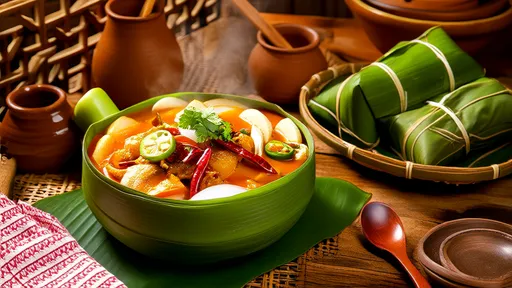
Stepping into the aromatic embrace of a traditional Khmer kitchen in Cambodia is to embark on a sensory journey that transcends mere eating. Here, amid the rhythmic chopping of lemongrass, the sizzle of pastes in hot pans, and the gentle rustle of fresh banana leaves being prepared, one finds the soul of Cambodian cuisine. It is a cuisine of balance, of history, and of profound connection to the land and its waterways. Two dishes, in particular, stand as pillars of this culinary tradition: the iconic Fish Amok and the humble yet complex Banana Leaf Wrapped Package. To understand them is to understand a story—a story told not in chapters, but through the fundamental flavors of sour, sweet, bitter, and spicy that dance upon the palate.
Nestled just across the causeway from Singapore, Johor Bahru often lives in the shadow of its glitzy neighbor. While Singapore draws crowds with its Michelin stars and polished hawker centers, JB—as locals affectionately call it—hides a treasure trove of culinary delights that won’t break the bank. For those willing to venture beyond the well-trodden path, this Malaysian city offers an authentic, vibrant, and deeply flavorful food scene that tells the story of its rich cultural tapestry.
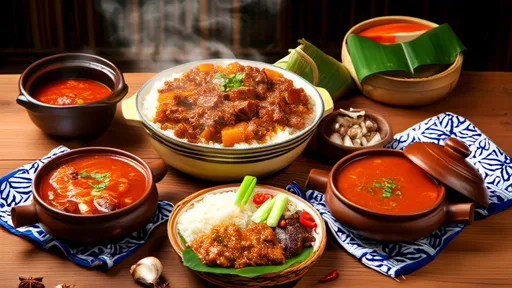
Stepping into a Padang restaurant is like entering a culinary theater where the performance is as intense as the flavors. Before you even have a chance to glance at a menu—if one exists at all—a waiter approaches your table with a tower of small plates, each holding a different dish. This is the legendary hidang style of serving, a tradition as bold and uncompromising as the Minangkabau culture from which it springs. You don’t order; you are presented with possibility. The rule is simple yet startling to the uninitiated: you pay only for what you touch.
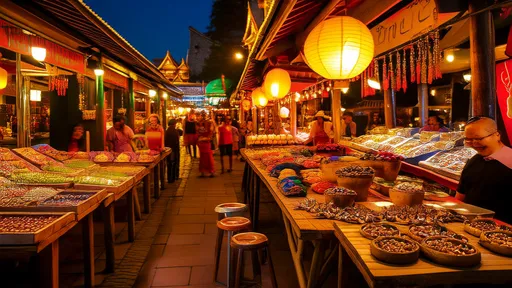
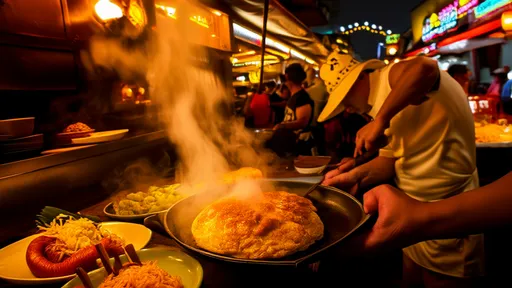
As dusk descends upon the ancient city of Chiang Mai, a vibrant transformation takes place along Ratchadamnoen Road and its surrounding lanes. The Sunday Night Market, a weekly spectacle that draws both locals and travelers into its bustling embrace, awakens with a symphony of sights, sounds, and aromas. From the intricate handcrafted treasures that tell stories of Lanna heritage to the irresistible allure of mango sticky rice that sweetens the tropical evening air, this market is not merely a place to shop or eat—it is an immersive cultural carnival, a living tapestry of Northern Thai life.
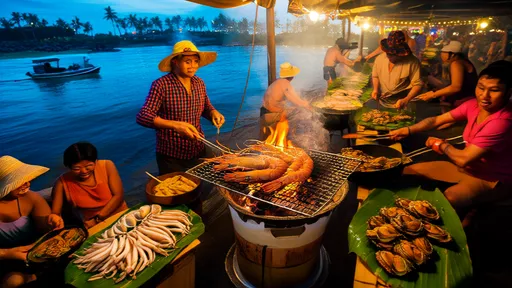
In the heart of the Philippines, where the sun kisses the sea and the air hums with life, lies Cebu—a haven for those seeking not just a meal, but an experience. Here, the tradition of eating with one’s hands isn’t just a method; it’s a celebration of flavor, community, and authenticity. And when it comes to seafood, Cebu offers a feast so bold, so unapologetically rich, that it leaves an indelible mark on every traveler’s soul.
In the labyrinthine heart of Hanoi, where the ancient rhythms of Vietnam pulse strongest, lies the legendary Old Quarter—a place locals call 36 Pho Phuong, the 36 Streets. Each street, historically dedicated to a specific craft or guild, forms a mosaic of Vietnam’s soul. And weaving through the smoky, fragrant air of this district is the story of a humble bowl of soup that is anything but simple: Pho. This is not just a dish; it is a narrative steeped in history, a daily ritual, and a fierce culinary battleground where tradition and innovation quietly clash.
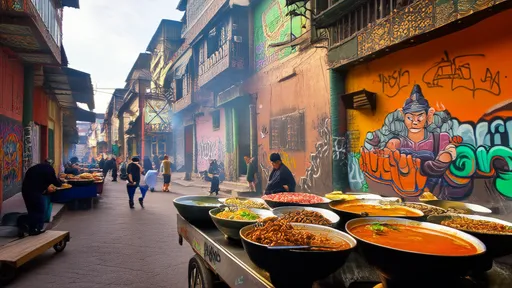
George Town, the vibrant capital of Penang, is a city where history, culture, and cuisine converge in the most delightful ways. Among its labyrinth of narrow streets and colorful shophouses, two distinct yet intertwined treasures await discovery: the iconic murals that adorn its walls and the soul-satisfying street food that defines its culinary landscape. For travelers and food enthusiasts, there is no greater adventure than tracing the vibrant street art through the city’s heart while hunting down the most authentic bowls of laksa and plates of char kway teow—a journey that engages all the senses.
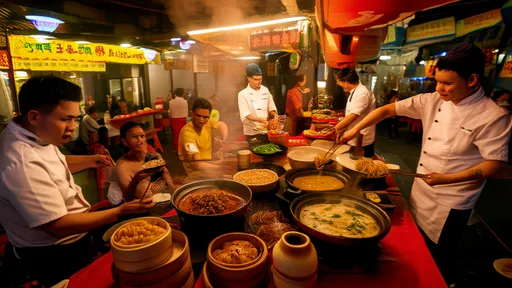
In the vibrant, chaotic heart of Bangkok, a unique culinary revolution has been quietly simmering for decades, one that challenges the very foundations of fine dining. The inclusion of street food in the prestigious Michelin Guide was not merely an addition; it was a seismic acknowledgment of an entire culture of cooking that thrives on pavements, under makeshift awnings, and over roaring woks. This guide, particularly spotlighting legends like Jay Fai, has done more than just recommend dishes; it has validated a way of life, immortalizing the skill, dedication, and artistry found at the humble stalls that line the city's bustling soi (streets). It tells a story where a coveted star is not born in a sterile, temperature-controlled kitchen but amidst the heat, smoke, and rhythmic clang of a street chef's domain.
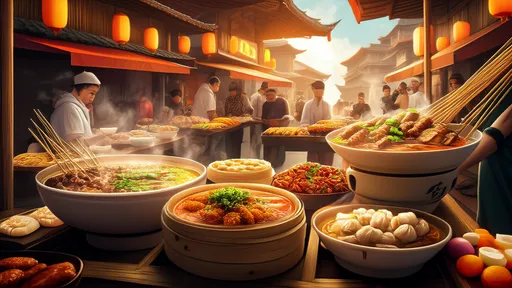
Singapore’s hawker centres are culinary institutions that offer a vibrant and affordable taste of the world. With just 50 Singapore dollars, one can embark on a global gastronomic journey, sampling dishes that reflect the rich cultural tapestry of the city-state. These bustling food havens are more than just places to eat—they are social hubs where diverse communities gather, and where tradition and innovation meet on a plate.
In the turquoise waters of Myanmar's Mergui Archipelago, a unique culture breathes its last. The Moken people, often called Asia's last sea nomads, have navigated these 800 islands for centuries without passports, maps or permanent addresses. Their entire existence has been woven into the tidal rhythms, monsoon winds and migratory patterns of marine life. Yet as the 21st century reaches even these remote corners of Southeast Asia, their ancient way of life stands at the brink of vanishing forever.
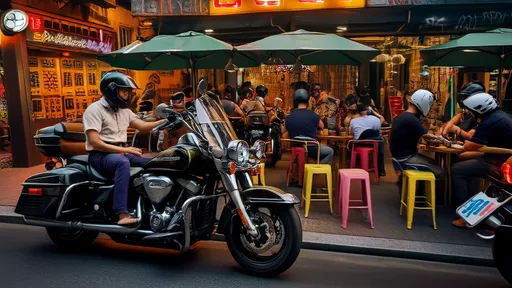
In the heart of Ho Chi Minh City, a unique urban symphony plays out daily, composed of two seemingly dissonant elements: the relentless roar of millions of motorcycles and the serene, slow-paced ritual of street-side coffee. This is not merely a coexistence; it is a profound, lived philosophy, a cultural dialectic that defines the soul of Vietnam's largest metropolis. The motorbike, a symbol of frantic motion, individual hustle, and relentless progress, engages in a constant, beautiful dance with the street coffee shop, an oasis of stillness, community, and contemplation. Together, they form a cohesive worldview, a guide to navigating modern life that is distinctly Saigonese.
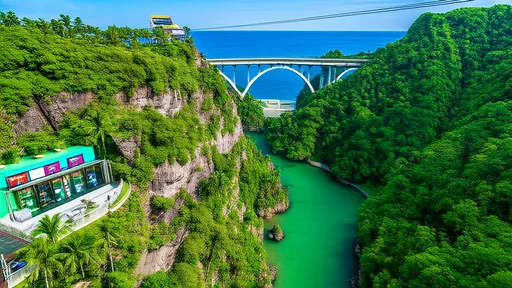
Nestled within the azure embrace of the Andaman Sea, Langkawi stands as a jewel of Malaysia’s northwestern coast, a destination where nature’s ancient whispers meet modern indulgence. Among its many attractions, the Sky Bridge emerges as a breathtaking feat of engineering, suspended high above the verdant rainforest, offering not just panoramic views but a gateway to the island’s profound geological history. Below this architectural marvel lies a terrain sculpted over millennia, a silent narrator of Earth’s dynamic past. Simultaneously, Langkawi’s status as a duty-free haven adds a layer of contemporary allure, inviting visitors to explore not only its natural wonders but also its vibrant shopping scenes. This unique blend of primordial narrative and modern luxury defines the Langkawi experience, making it a compelling tale of time and treasure.
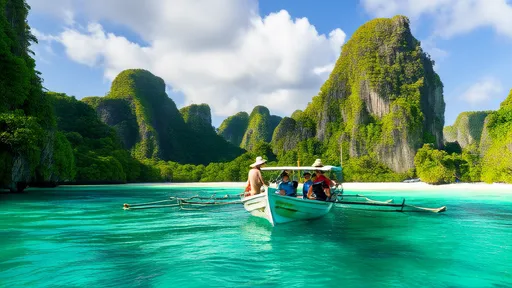
Nestled in the northernmost reaches of Palawan, El Nido remains one of the Philippines' most breathtaking archipelagos, often hailed as the last frontier of unspoiled natural beauty. Its name, which translates to "The Nest" in Spanish, evokes a sense of sheltered secrecy, a place where nature has carefully guarded its treasures against the rapid march of modernization. For travelers seeking an escape from the well-trodden tourist paths, El Nido offers a raw, exhilarating experience that feels both timeless and urgently present. This is not merely a destination; it is a call to adventure, an invitation to explore landscapes that seem pulled from the pages of a fantasy novel.
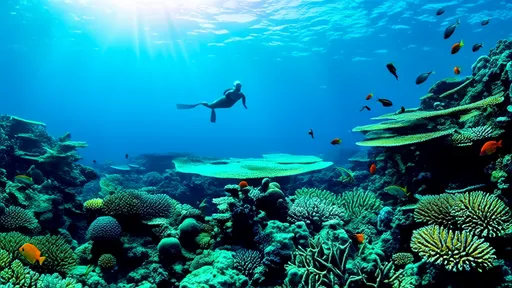
Nestled in the Andaman Sea, the Similan Islands of Thailand represent one of the planet's most extraordinary marine sanctuaries, a destination that seems plucked from a diver's most vivid dreams. What sets this archipelago apart, beyond its sheer underwater brilliance, is its unique conservation rhythm: the islands are open to visitors for only approximately 150 days each year. This enforced closure, typically from mid-May to mid-October, is a critical management strategy designed to allow the fragile ecosystems, both marine and terrestrial, to recover from the impacts of tourism and to weather the tumultuous monsoon season. This cyclical breathing space is what keeps the Similan Islands not just a destination, but a perpetually rejuvenating wonder.
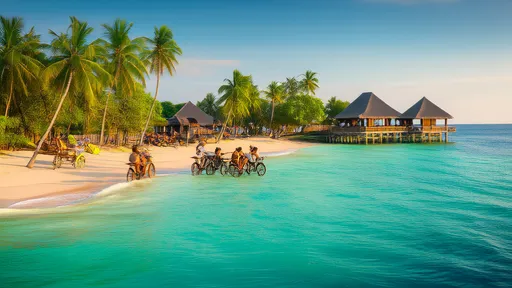
Nestled within the cerulean embrace of the Indian Ocean, the Gili Islands of Indonesia offer a sanctuary where time seems to slow to the gentle rhythm of horse hooves and bicycle wheels. Comprising three small islands—Gili Trawangan, Gili Meno, and Gili Air—this archipelago is a world apart, not just in geography but in philosophy. Here, the internal combustion engine is conspicuously absent, replaced by a transportation symphony of horse-drawn carriages, known as cidomos, and the simple, human-powered bicycle. This isn't merely a quaint tourist feature; it is the foundational principle of a lifestyle that prioritizes tranquility, sustainability, and a profound connection to the natural environment. The absence of roaring engines and honking horns is the first thing a visitor notices, an auditory void quickly filled by the sound of waves, wind, and the soft chatter of island life.
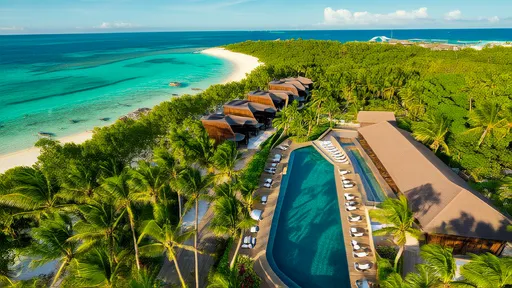
Nestled in the Gulf of Thailand, Phu Quoc Island emerges as Vietnam's best-kept secret, a sanctuary where time seems to stretch and soften, inviting travelers into its embrace of unhurried luxury. This pearl of an island, once a sleepy fishing community, has blossomed into a premier destination for those seeking refuge from the frenetic pace of modern life, offering a sophisticated blend of natural beauty, exquisite accommodations, and a profound sense of peace. It is not merely a place to visit; it is an experience to be absorbed slowly, a chapter of life to be savored.
Nestled on the northeastern coast of Borneo, the small fishing village of Semporna serves as the gateway to one of Malaysia’s most breathtaking marine wonderlands. While the town itself is modest, its surroundings are nothing short of spectacular—a scattering of islands embraced by turquoise waters teeming with vibrant coral reefs and exotic marine life. For travelers seeking both adventure and serenity, the experience of staying in a water villa and diving into the Coral Sea here is nothing less than transformative.
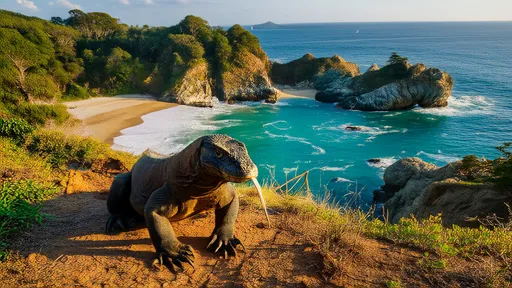
In the heart of the Indonesian archipelago lies a realm where myth and reality converge—Komodo Island. This untamed sanctuary, part of the Komodo National Park, offers an encounter with creatures that seem to have stepped straight out of a prehistoric epoch. The island is home to the Komodo dragon, the world’s largest lizard, a formidable predator that has roamed these lands for millions of years. But the island’s wonders don’t end there; it also boasts one of nature’s most whimsical creations: a beach with sand the color of cotton candy. A journey to Komodo is not merely a trip; it is an immersion into a landscape where the extraordinary becomes tangible.
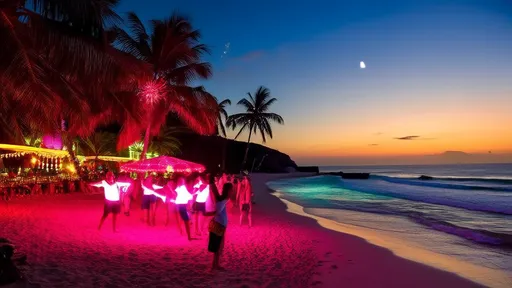
There is a rhythm to the island of Koh Pha Ngan, a heartbeat that pulses to two distinct and opposing tempos. By day, it is a lullaby of lapping waves and rustling palm fronds; by night, a thunderous, primal drumbeat that calls thousands to its famous shores. This is the island’s defining duality, a schizophrenic charm that allows a traveler to exist in two parallel realities within the span of a single sunrise and sunset. To know Koh Pha Ngan is to understand this oscillation, to willingly be swept up in its extreme currents of chaotic euphoria and profound peace.
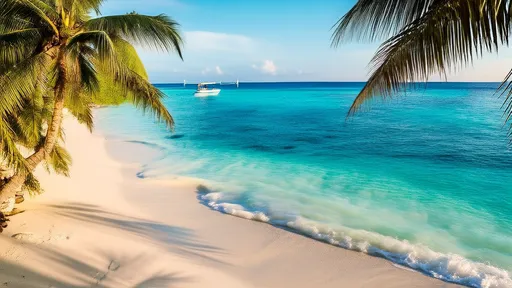
Nestled in the heart of the Philippines, Boracay Island emerges as a paradise on earth, celebrated globally for its extraordinary natural beauty. The island’s most iconic feature is its breathtakingly fine white sand, often hailed as the finest in the world. This powdery sand, soft as flour underfoot, stretches along the famed White Beach, creating a pristine shoreline that captivates every visitor. Complementing this is the crystal-clear turquoise water, so transparent it has earned the poetic name "glass sea," reflecting the sky like a vast, serene mirror. Together, these elements form a landscape of surreal beauty, making Boracay a dream destination for travelers seeking both relaxation and adventure.