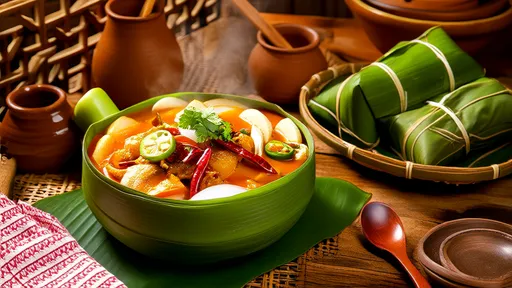
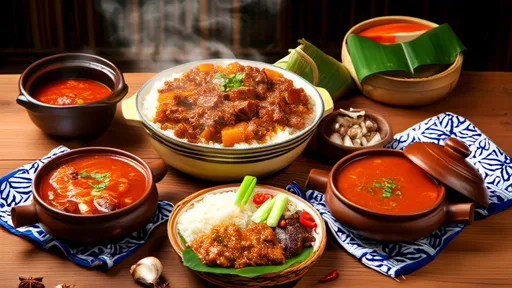
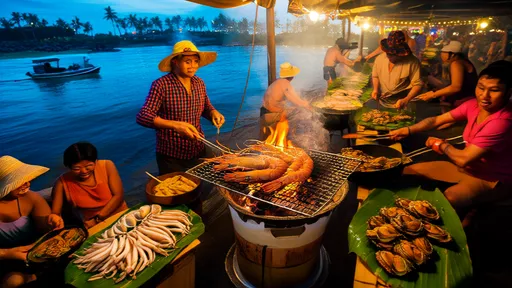
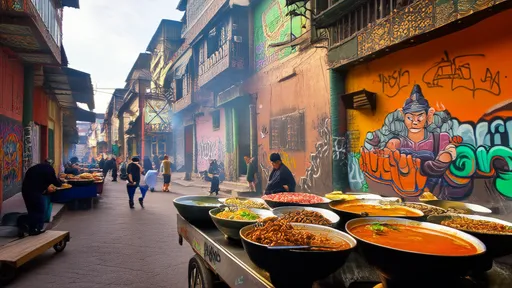
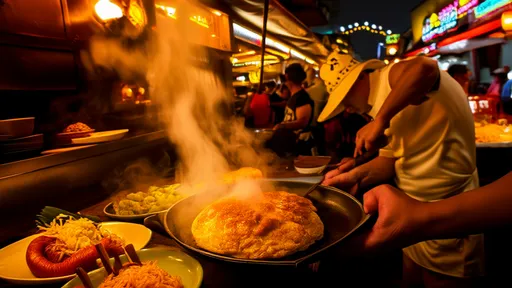
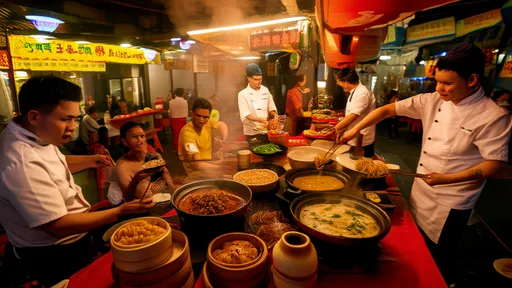
Stepping into a Padang restaurant is like entering a culinary theater where the performance is as intense as the flavors. Before you even have a chance to glance at a menu—if one exists at all—a waiter approaches your table with a tower of small plates, each holding a different dish. This is the legendary hidang style of serving, a tradition as bold and uncompromising as the Minangkabau culture from which it springs. You don’t order; you are presented with possibility. The rule is simple yet startling to the uninitiated: you pay only for what you touch.
The philosophy behind this "serve first, pay later" approach is deeply rooted in the Minangkabau values of generosity and hospitality. In West Sumatra, food is not merely sustenance; it is an expression of respect, a symbol of community, and a point of profound cultural pride. To place an empty table before a guest is considered inhospitable. Therefore, the table is immediately filled with an array of offerings—a gesture that says, "You are welcome here, and you may partake of all we have." The economic transaction becomes secondary to the human connection, a concept that feels almost revolutionary in today's world of calculated dining.
The visual spectacle is overwhelming. A server, often balancing a dozen plates along one arm, will gracefully lay out a mosaic of dishes directly onto your table, which is usually covered in a simple plastic tablecloth for easy cleanup. The array is a vibrant palette of colors and textures: the deep red of rendang, the rich yellow of gulai, the bright green of daun singkong (cassava leaves), and the fiery hue of sambal lado. The air thickens with the complex aroma of toasted coconut, lemongrass, galangal, and a dozen other spices that have been painstakingly ground and simmered for hours.
At the heart of every Padang meal is rendang. Often mistakenly called a curry, it is in fact a dry beef dish slow-cooked in coconut milk and a paste of ginger, galangal, turmeric, and chilies until the liquid completely evaporates and the meat caramelizes in the remaining oils. This process, which can take up to four hours, transforms tough cuts of meat into incredibly tender, flavorful morsels that are simultaneously spicy, sweet, and savory. UNESCO-recognized and frequently voted a world’s favorite food, rendang is the undisputed king of the Padang table.
But a monarch is nothing without its court. Surrounding the rendang are its essential companions. Gulai, a light yellow curry, comes in many forms, with chicken (gulai ayam), beef organs (gulai tambusu), or fish heads being common. Dendeng balado offers a different textural experience: thinly sliced beef jerky that is fried and then tossed in a blisteringly hot sambal made from crushed red chilies. Sambal lado (or sambal ijo) provides a fresh, sharp heat from green chilies, while ayam pop, a deceptively simple-looking dish of boiled chicken fried briefly in coconut oil, delivers a surprising depth of flavor absorbed from a broth infused with pandan leaves and garlic.
Then comes the heat. Padang food is not for the faint of heart. The Minangkabau people have a saying, "alam takambang jadi guru" (nature is our teacher), and they have learned well from their land, which yields some of the world's most potent chilies. The spiciness is not a mere additive; it is foundational, woven into the very DNA of each dish. It builds gradually, a crescendo of fire that awakens the palate and clears the sinuses, often leaving newcomers reaching for the ubiquitous glass of es teh (iced tea) or air putih (plain water). This is not pain for pain's sake; it is a complex, exhilarating sensation that many describe as addictive.
The dining ritual is an exercise in choice and consequence. As you eat, you push aside the plates you have sampled. At the meal's end, the waiter returns to assess the damage. The bill is calculated based solely on the emptied or disturbed plates. Untouched dishes are whisked away to be offered to another table. This system requires a surprising amount of honesty and trust on both sides—a silent agreement between host and guest. It turns a simple meal into a mindful experience, making you acutely aware of every choice you make with your spoon.
For the first-time visitor, the experience can be as intimidating as it is exciting. The sheer number of options induces a kind of paralysis. Which dishes should I try? How spicy is too spicy? The best strategy is to embrace the adventure. Point to what looks good, or simply let the waiter recommend a classic combination. Start with a small portion of rice—the neutral base that is your shield against the fire—and then add spoonfuls of the various curries and rendangs. Mix, taste, and learn. The meal becomes a journey of discovery, one fiery, flavorful bite at a time.
Beyond the food itself, the Padang restaurant is a social microcosm. It is a great equalizer, a place where office workers in Jakarta, tourists from abroad, and local families all share in the same ritual. The atmosphere is invariably loud, bustling, and unpretentious. Conversations overlap with the clatter of plates and the sizzle from the kitchen. There is no room for fussy dining here; meals are consumed with hands or a spoon and fork, with speed and gusto, often while standing at a crowded counter during the busy lunch rush.
This "serve first, pay later" model is a brilliant business strategy rooted in psychology. The presentation of so much food creates a powerful temptation. It is far more difficult to say no to a dish sitting right in front of you than it is to skip a line on a menu. The visual feast stimulates the appetite and often leads diners to try—and thus pay for—more than they initially intended. It is a testament to the power of the food that customers rarely feel cheated but instead feel they have participated in something unique and satisfying.
In a globalized food scene often dominated by fusion and innovation, Padang cuisine stands as a bastion of tradition. Its methods have remained largely unchanged for generations. The recipes are guarded secrets, passed down through families. The "hidang" style, while logistically challenging, is non-negotiable. It is the soul of the experience. To change it would be to strip the cuisine of its context, its drama, and its heart. It remains one of the world's most authentic and thrilling culinary adventures, a spicy, generous, and unforgettable lesson in Sumatran culture where the bill, much like the flavors, makes a lasting impression.
Stepping into the aromatic embrace of a traditional Khmer kitchen in Cambodia is to embark on a sensory journey that transcends mere eating. Here, amid the rhythmic chopping of lemongrass, the sizzle of pastes in hot pans, and the gentle rustle of fresh banana leaves being prepared, one finds the soul of Cambodian cuisine. It is a cuisine of balance, of history, and of profound connection to the land and its waterways. Two dishes, in particular, stand as pillars of this culinary tradition: the iconic Fish Amok and the humble yet complex Banana Leaf Wrapped Package. To understand them is to understand a story—a story told not in chapters, but through the fundamental flavors of sour, sweet, bitter, and spicy that dance upon the palate.
Nestled just across the causeway from Singapore, Johor Bahru often lives in the shadow of its glitzy neighbor. While Singapore draws crowds with its Michelin stars and polished hawker centers, JB—as locals affectionately call it—hides a treasure trove of culinary delights that won’t break the bank. For those willing to venture beyond the well-trodden path, this Malaysian city offers an authentic, vibrant, and deeply flavorful food scene that tells the story of its rich cultural tapestry.
Stepping into a Padang restaurant is like entering a culinary theater where the performance is as intense as the flavors. Before you even have a chance to glance at a menu—if one exists at all—a waiter approaches your table with a tower of small plates, each holding a different dish. This is the legendary hidang style of serving, a tradition as bold and uncompromising as the Minangkabau culture from which it springs. You don’t order; you are presented with possibility. The rule is simple yet startling to the uninitiated: you pay only for what you touch.
As dusk descends upon the ancient city of Chiang Mai, a vibrant transformation takes place along Ratchadamnoen Road and its surrounding lanes. The Sunday Night Market, a weekly spectacle that draws both locals and travelers into its bustling embrace, awakens with a symphony of sights, sounds, and aromas. From the intricate handcrafted treasures that tell stories of Lanna heritage to the irresistible allure of mango sticky rice that sweetens the tropical evening air, this market is not merely a place to shop or eat—it is an immersive cultural carnival, a living tapestry of Northern Thai life.
In the heart of the Philippines, where the sun kisses the sea and the air hums with life, lies Cebu—a haven for those seeking not just a meal, but an experience. Here, the tradition of eating with one’s hands isn’t just a method; it’s a celebration of flavor, community, and authenticity. And when it comes to seafood, Cebu offers a feast so bold, so unapologetically rich, that it leaves an indelible mark on every traveler’s soul.
In the labyrinthine heart of Hanoi, where the ancient rhythms of Vietnam pulse strongest, lies the legendary Old Quarter—a place locals call 36 Pho Phuong, the 36 Streets. Each street, historically dedicated to a specific craft or guild, forms a mosaic of Vietnam’s soul. And weaving through the smoky, fragrant air of this district is the story of a humble bowl of soup that is anything but simple: Pho. This is not just a dish; it is a narrative steeped in history, a daily ritual, and a fierce culinary battleground where tradition and innovation quietly clash.
George Town, the vibrant capital of Penang, is a city where history, culture, and cuisine converge in the most delightful ways. Among its labyrinth of narrow streets and colorful shophouses, two distinct yet intertwined treasures await discovery: the iconic murals that adorn its walls and the soul-satisfying street food that defines its culinary landscape. For travelers and food enthusiasts, there is no greater adventure than tracing the vibrant street art through the city’s heart while hunting down the most authentic bowls of laksa and plates of char kway teow—a journey that engages all the senses.
In the vibrant, chaotic heart of Bangkok, a unique culinary revolution has been quietly simmering for decades, one that challenges the very foundations of fine dining. The inclusion of street food in the prestigious Michelin Guide was not merely an addition; it was a seismic acknowledgment of an entire culture of cooking that thrives on pavements, under makeshift awnings, and over roaring woks. This guide, particularly spotlighting legends like Jay Fai, has done more than just recommend dishes; it has validated a way of life, immortalizing the skill, dedication, and artistry found at the humble stalls that line the city's bustling soi (streets). It tells a story where a coveted star is not born in a sterile, temperature-controlled kitchen but amidst the heat, smoke, and rhythmic clang of a street chef's domain.
Singapore’s hawker centres are culinary institutions that offer a vibrant and affordable taste of the world. With just 50 Singapore dollars, one can embark on a global gastronomic journey, sampling dishes that reflect the rich cultural tapestry of the city-state. These bustling food havens are more than just places to eat—they are social hubs where diverse communities gather, and where tradition and innovation meet on a plate.
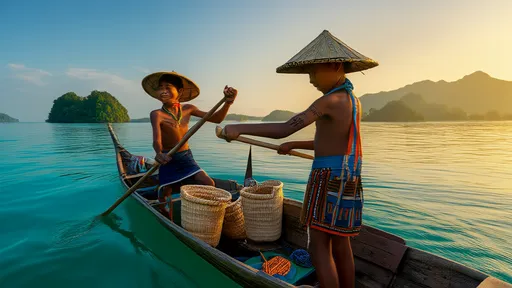
In the turquoise waters of Myanmar's Mergui Archipelago, a unique culture breathes its last. The Moken people, often called Asia's last sea nomads, have navigated these 800 islands for centuries without passports, maps or permanent addresses. Their entire existence has been woven into the tidal rhythms, monsoon winds and migratory patterns of marine life. Yet as the 21st century reaches even these remote corners of Southeast Asia, their ancient way of life stands at the brink of vanishing forever.
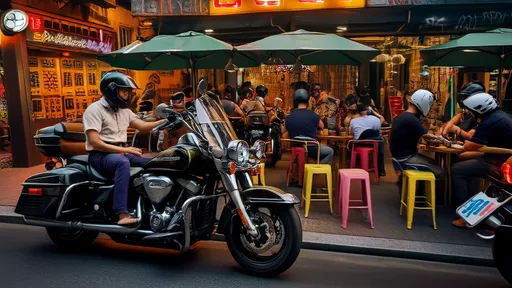
In the heart of Ho Chi Minh City, a unique urban symphony plays out daily, composed of two seemingly dissonant elements: the relentless roar of millions of motorcycles and the serene, slow-paced ritual of street-side coffee. This is not merely a coexistence; it is a profound, lived philosophy, a cultural dialectic that defines the soul of Vietnam's largest metropolis. The motorbike, a symbol of frantic motion, individual hustle, and relentless progress, engages in a constant, beautiful dance with the street coffee shop, an oasis of stillness, community, and contemplation. Together, they form a cohesive worldview, a guide to navigating modern life that is distinctly Saigonese.
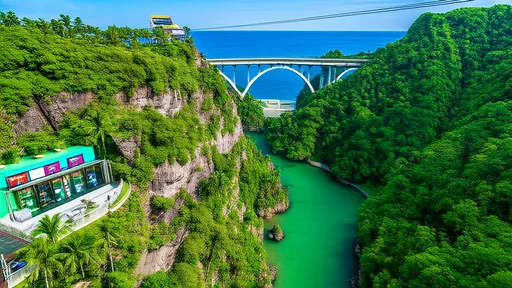
Nestled within the azure embrace of the Andaman Sea, Langkawi stands as a jewel of Malaysia’s northwestern coast, a destination where nature’s ancient whispers meet modern indulgence. Among its many attractions, the Sky Bridge emerges as a breathtaking feat of engineering, suspended high above the verdant rainforest, offering not just panoramic views but a gateway to the island’s profound geological history. Below this architectural marvel lies a terrain sculpted over millennia, a silent narrator of Earth’s dynamic past. Simultaneously, Langkawi’s status as a duty-free haven adds a layer of contemporary allure, inviting visitors to explore not only its natural wonders but also its vibrant shopping scenes. This unique blend of primordial narrative and modern luxury defines the Langkawi experience, making it a compelling tale of time and treasure.
Nestled in the northernmost reaches of Palawan, El Nido remains one of the Philippines' most breathtaking archipelagos, often hailed as the last frontier of unspoiled natural beauty. Its name, which translates to "The Nest" in Spanish, evokes a sense of sheltered secrecy, a place where nature has carefully guarded its treasures against the rapid march of modernization. For travelers seeking an escape from the well-trodden tourist paths, El Nido offers a raw, exhilarating experience that feels both timeless and urgently present. This is not merely a destination; it is a call to adventure, an invitation to explore landscapes that seem pulled from the pages of a fantasy novel.
Nestled in the Andaman Sea, the Similan Islands of Thailand represent one of the planet's most extraordinary marine sanctuaries, a destination that seems plucked from a diver's most vivid dreams. What sets this archipelago apart, beyond its sheer underwater brilliance, is its unique conservation rhythm: the islands are open to visitors for only approximately 150 days each year. This enforced closure, typically from mid-May to mid-October, is a critical management strategy designed to allow the fragile ecosystems, both marine and terrestrial, to recover from the impacts of tourism and to weather the tumultuous monsoon season. This cyclical breathing space is what keeps the Similan Islands not just a destination, but a perpetually rejuvenating wonder.
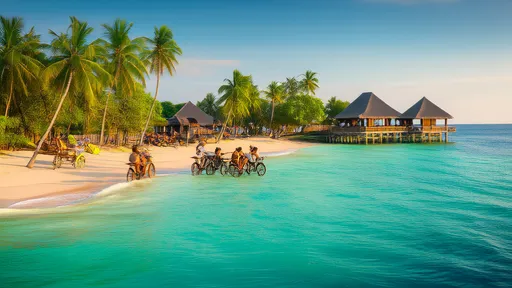
Nestled within the cerulean embrace of the Indian Ocean, the Gili Islands of Indonesia offer a sanctuary where time seems to slow to the gentle rhythm of horse hooves and bicycle wheels. Comprising three small islands—Gili Trawangan, Gili Meno, and Gili Air—this archipelago is a world apart, not just in geography but in philosophy. Here, the internal combustion engine is conspicuously absent, replaced by a transportation symphony of horse-drawn carriages, known as cidomos, and the simple, human-powered bicycle. This isn't merely a quaint tourist feature; it is the foundational principle of a lifestyle that prioritizes tranquility, sustainability, and a profound connection to the natural environment. The absence of roaring engines and honking horns is the first thing a visitor notices, an auditory void quickly filled by the sound of waves, wind, and the soft chatter of island life.
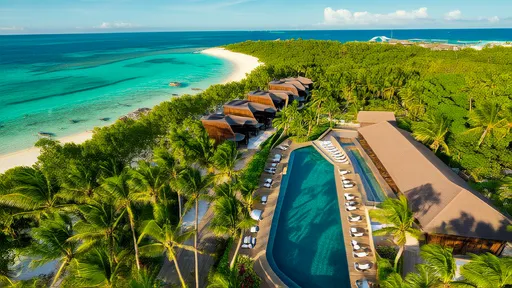
Nestled in the Gulf of Thailand, Phu Quoc Island emerges as Vietnam's best-kept secret, a sanctuary where time seems to stretch and soften, inviting travelers into its embrace of unhurried luxury. This pearl of an island, once a sleepy fishing community, has blossomed into a premier destination for those seeking refuge from the frenetic pace of modern life, offering a sophisticated blend of natural beauty, exquisite accommodations, and a profound sense of peace. It is not merely a place to visit; it is an experience to be absorbed slowly, a chapter of life to be savored.
Nestled on the northeastern coast of Borneo, the small fishing village of Semporna serves as the gateway to one of Malaysia’s most breathtaking marine wonderlands. While the town itself is modest, its surroundings are nothing short of spectacular—a scattering of islands embraced by turquoise waters teeming with vibrant coral reefs and exotic marine life. For travelers seeking both adventure and serenity, the experience of staying in a water villa and diving into the Coral Sea here is nothing less than transformative.
In the heart of the Indonesian archipelago lies a realm where myth and reality converge—Komodo Island. This untamed sanctuary, part of the Komodo National Park, offers an encounter with creatures that seem to have stepped straight out of a prehistoric epoch. The island is home to the Komodo dragon, the world’s largest lizard, a formidable predator that has roamed these lands for millions of years. But the island’s wonders don’t end there; it also boasts one of nature’s most whimsical creations: a beach with sand the color of cotton candy. A journey to Komodo is not merely a trip; it is an immersion into a landscape where the extraordinary becomes tangible.
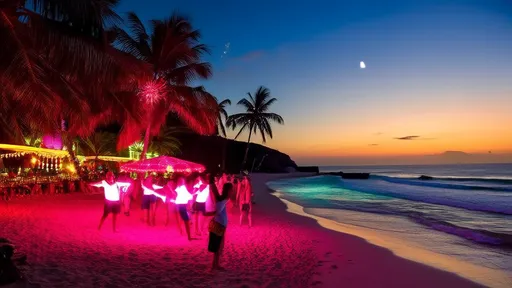
There is a rhythm to the island of Koh Pha Ngan, a heartbeat that pulses to two distinct and opposing tempos. By day, it is a lullaby of lapping waves and rustling palm fronds; by night, a thunderous, primal drumbeat that calls thousands to its famous shores. This is the island’s defining duality, a schizophrenic charm that allows a traveler to exist in two parallel realities within the span of a single sunrise and sunset. To know Koh Pha Ngan is to understand this oscillation, to willingly be swept up in its extreme currents of chaotic euphoria and profound peace.
Nestled in the heart of the Philippines, Boracay Island emerges as a paradise on earth, celebrated globally for its extraordinary natural beauty. The island’s most iconic feature is its breathtakingly fine white sand, often hailed as the finest in the world. This powdery sand, soft as flour underfoot, stretches along the famed White Beach, creating a pristine shoreline that captivates every visitor. Complementing this is the crystal-clear turquoise water, so transparent it has earned the poetic name "glass sea," reflecting the sky like a vast, serene mirror. Together, these elements form a landscape of surreal beauty, making Boracay a dream destination for travelers seeking both relaxation and adventure.